Radio Frequency Identification (RFID) is a powerful technology that is transforming how businesses track, identify, and manage assets. From inventory management to access control, RFID enables fast, contactless, and accurate data capture. As industries move towards automation and digital transformation, RFID is becoming an essential tool for improving efficiency and security.
What is RFID Technology?
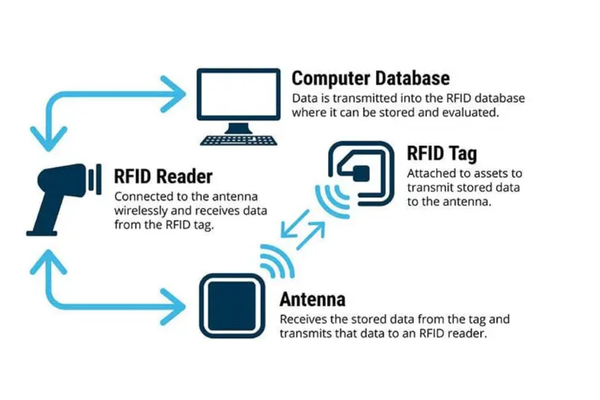
RFID (Radio Frequency Identification) is a wireless technology that uses radio waves to identify and track objects. It consists of three main components:
RFID Tag – Attached to the object, containing stored data
RFID Reader – Captures data from the tag using radio signals
Antenna – Enables communication between the tag and reader
Unlike barcodes, RFID does not require direct line-of-sight, making it faster and more efficient.
How RFID Works
RFID systems work by transmitting radio signals between the reader and the tag. When a tag enters the reader’s range, it sends back stored information such as identification number or product details. This data is then processed and stored in a system for tracking and analysis.
This contactless communication allows multiple items to be scanned simultaneously, saving time and reducing manual effort.
Types of RFID Systems
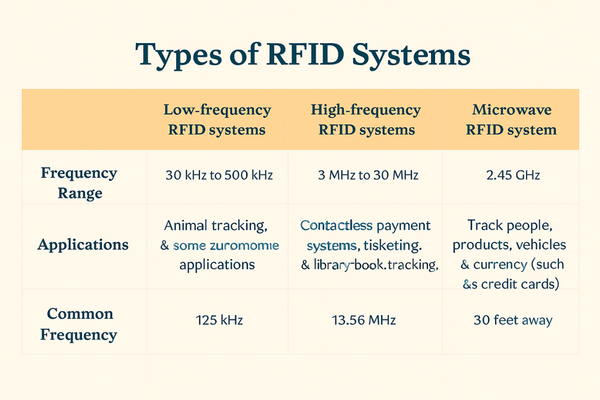
RFID technology is categorized based on frequency:
Low Frequency (LF)
✔ Short reading range
✔ Used for animal tracking and access control
High Frequency (HF)
✔ Medium range
✔ Common in smart cards and library systems
Ultra High Frequency (UHF)
✔ Long range and fast reading
✔ Ideal for inventory, logistics, and asset tracking
Benefits of RFID Technology
RFID offers several advantages over traditional systems:
✔ Faster and contactless data capture
✔ Real-time tracking and visibility
✔ Reduced human error
✔ Improved inventory accuracy
✔ Enhanced security and access control
✔ Ability to scan multiple items at once
Applications of RFID
RFID is widely used across multiple industries:
✔ Retail and Inventory Management
✔ Warehousing and Logistics
✔ Healthcare and Hospitals
✔ Educational Institutions
✔ Event Management and Ticketing
✔ Parking and Access Control
✔ Textile and Laundry Management
✔ Asset Tracking in Enterprises
Why Businesses Are Adopting RFID
Businesses today require speed, accuracy, and automation. RFID helps organizations reduce operational costs, improve efficiency, and gain better control over their processes. It also enhances customer experience by enabling faster services and seamless operations.
Future of RFID Technology
With advancements in IoT and automation, RFID technology is expected to grow rapidly. Integration with cloud systems, analytics, and smart devices will further enhance its capabilities. Businesses that adopt RFID today will be better prepared for the future of digital transformation.
Conclusion
RFID technology is no longer optional—it is a necessity for modern businesses aiming to stay competitive. By enabling smart tracking, improved security, and operational efficiency, RFID continues to revolutionize industries worldwide.